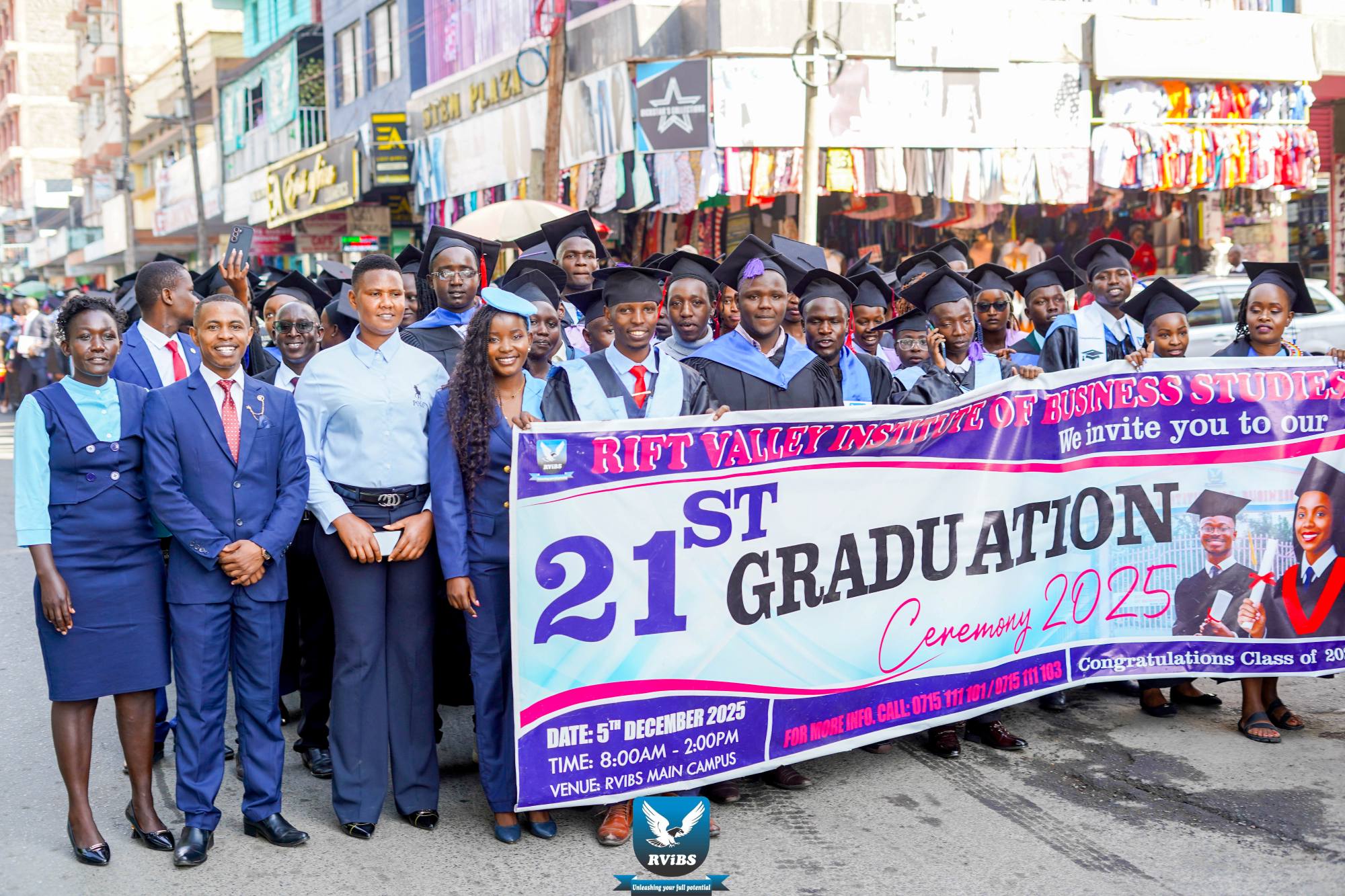
John Kimemia Gitau has a challenge for the Class of 2026 at the Rift Valley Institute of Business Studies (RVIBS). It starts the day they leave college.
“Give yourself 90 days,” he says. “Find one problem in your trade, fix it with what you learnt here, and show somebody the difference. An electrician who traces a fault, explains the repair and comes back when he promised has just given a customer three reasons to call him again.”
On Friday, 4 December 2026, RVIBS will hold its 22nd graduation ceremony at its main campus in Nakuru town, next to the Railways Police Station. The ceremony starts at 9.00 a.m. Graduates will receive certificates and diplomas in fields ranging from electrical installation and cosmetology to journalism and health sciences.
Gitau calls RVIBS the People’s College. “Our learners come from every corner and every kind of home,” he says. “Some come straight from Form Four. Some come after ten years in a job. The door is the same.”
A teacher in waiting
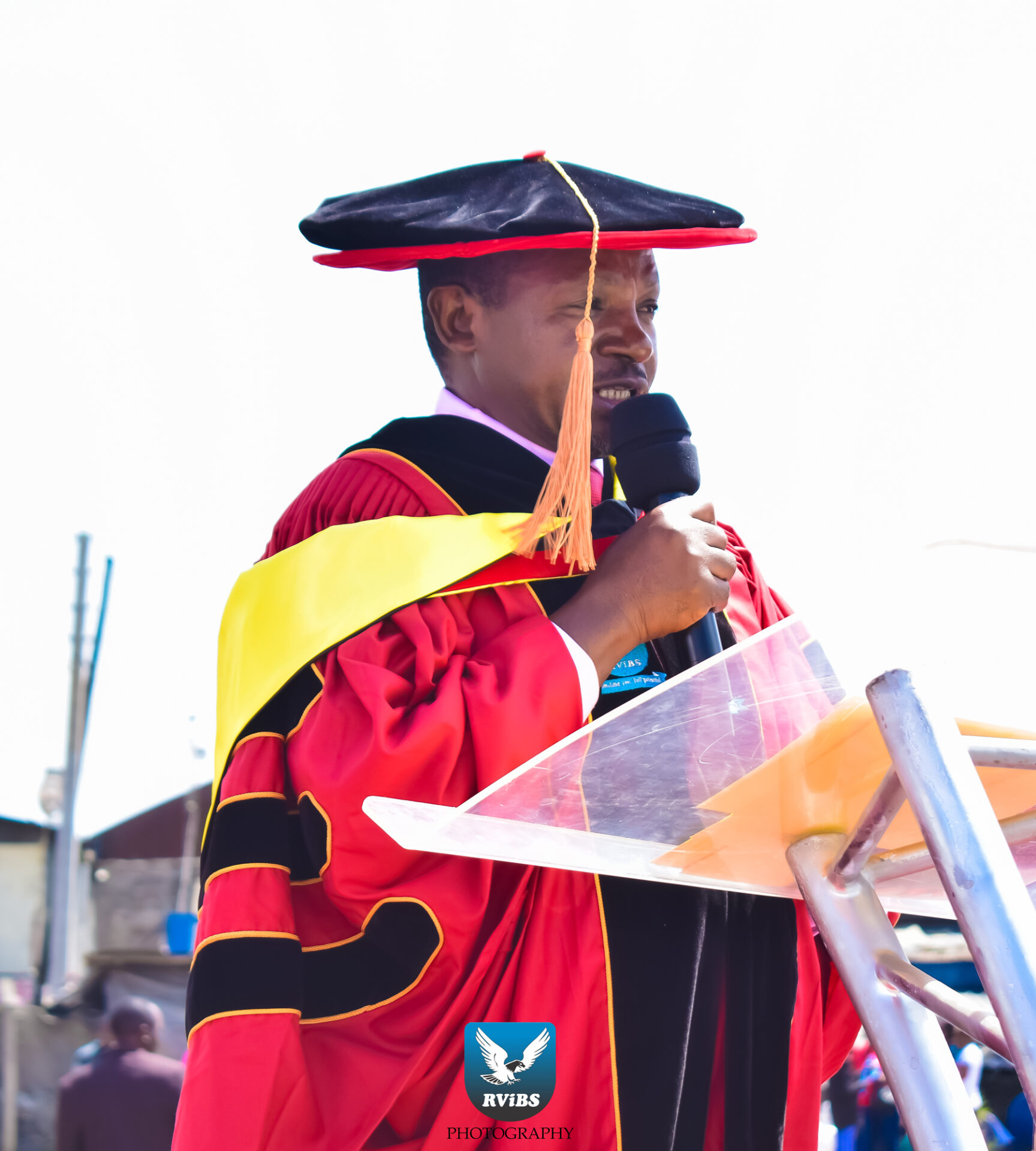
Gitau, a Starehe old boy, once imagined opening a primary school. “I’ve harboured a passion for teaching and learning,” he has said in past interviews. His first pupils were colleagues. After high school, he worked as a data-entry clerk and taught the people around him how to use computers. He studied while he worked and earned three promotions in three years. Later, as an operations manager at Unilever in Kericho, he trained the company’s staff.
After trying his hand at business in Nairobi, Gitau opened a cosmetics business in Kericho in 2006. Few schools in the area taught hairdressing and beauty therapy, and the fees put training beyond the reach of many young people. In 2007 he opened a hairdressing school of his own.
The year everything burned
The school was barely on its feet when violence broke out after Kenya’s disputed 2007 election. His businesses in Kericho went up in smoke. He closed the school and fled the town.
“I lost almost everything in a few weeks,” Gitau says. “What I kept was what I knew. Nobody can burn a skill. That is what I have been selling ever since.”
In mid-2008 he started again in Nakuru, teaching hairdressing and beauty therapy. So few students enrolled that he took a contract job at Kenya Breweries to help keep the college open, he later told The Standard.
“Starting over taught me what most of our learners face,” Gitau says. “They cannot afford a year on a course that does not lead to work. So every course we add has to answer one question: what will this person be able to do?”
Turning skills into careers
From those first two courses, RVIBS grew to 12 departments. Students can now study business and ICT, engineering, agriculture, health sciences and fashion design, among other fields. The college holds TVETA accreditation and prepares learners for examinations set by KNEC, TVET CDACC, NITA, ICM and KASNEB. At its 19th graduation ceremony in 2023, the college awarded qualifications to 586 graduates.
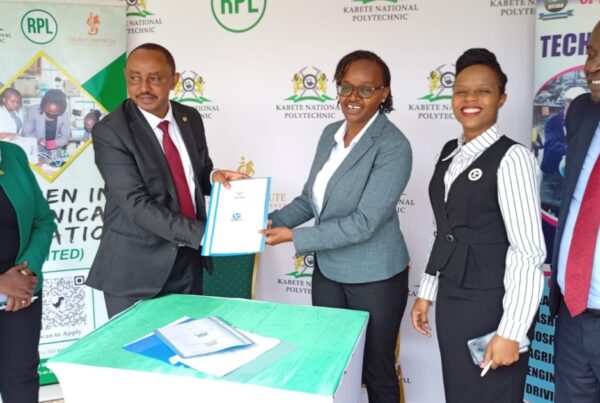
Media students make films with Ustadi Films and leave with a portfolio to show prospective employers. Through Recognition of Prior Learning, a fundi who learnt to wire houses as an apprentice can have those skills assessed for certification.
Proof in a promotion
Pauline Njoki was working in sales at Daima Mabati when she took a digital marketing course at RVIBS. She drew up a marketing strategy for her employer. That proposal, she told The Standard, earned her a promotion to a managerial position.
Njoki was one of 97 learners who graduated in January 2025 from digital skills courses fully sponsored through the World Bank-backed Kenya Industry and Entrepreneurship Project. RVIBS was one of 13 institutions selected from 360. In 2026, the RVIBS Tech Academy, run with Africa Tech Space, opened applications for its sixth cohort.
For Form Four leavers waiting for KCSE results, Gitau suggests starting with the work they want to do. “Ask yourself what you would like to be able to make, fix or improve,” he says. “Then compare the routes. A college diploma and a university degree can lead to the same field, and for many learners the diploma comes first.”
“I want graduates to come back and tell us what they built, fixed or started,” Gitau says. “The certificate only opens the door. What they do in the next 90 days is the real graduation.”
Considering the January 2027 intake? Explore RVIBS courses or contact admissions.
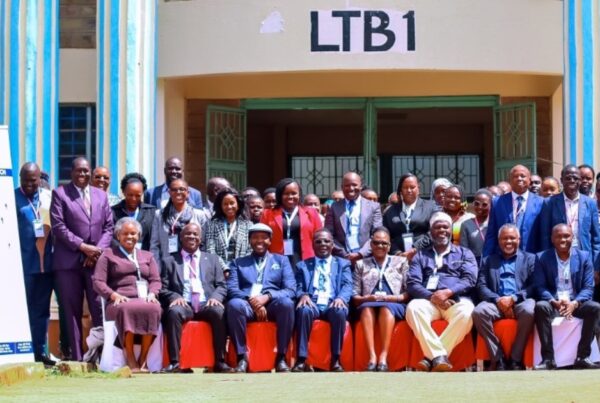
The cover photograph shows the procession at the college’s 21st graduation.